


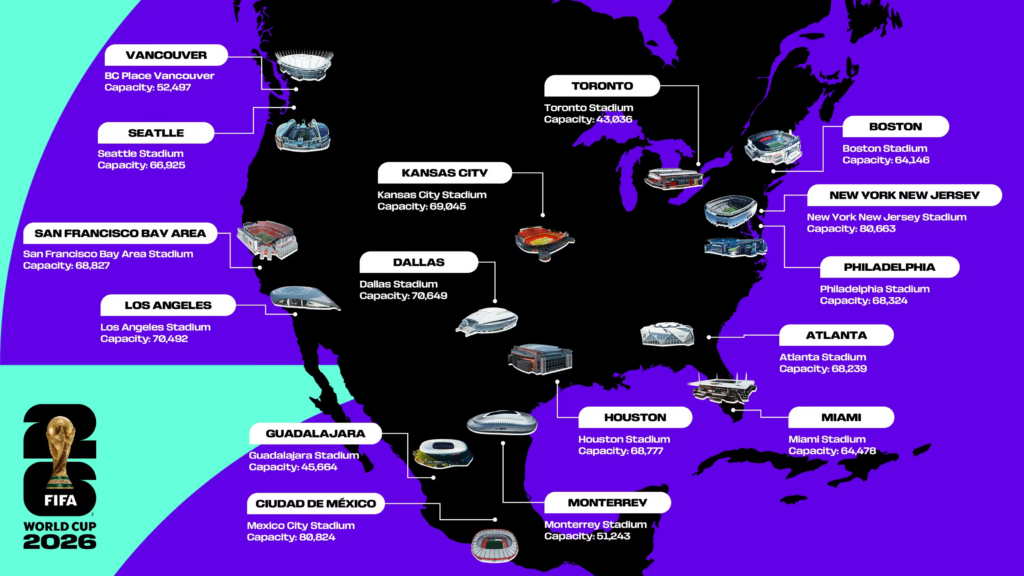
Group A
Mexico 🇲🇽
Mexico has never reached the quarter finals outside of Mexico. Many Mexico fans refer to this nagging history as the curse of “El Quinto Partido” (literal translation: the fifth game, but referring to making the quarter finals). For example, since Mexico last made the quarter-finals in the 1986 World Cup (the tournament that gave birth to the infamous “Hand of God”), Mexico:
- 1990: Was banned for an age manipulation scandal for the 1988 U20 World Cup;
- 1994: Lost in penalties to Bulgaria in the round of 16;
- 1998: Lost 1-2 to Germany off the back of two German goals in the last 15 minutes;
- 2002: Lost 0-2 to the US (cementing the famous Dos a Cero as our rallying chant) in the round of 16 and in a game that included a clear U.S. handball clearance;
- 2006: Lost 1-2 to Argentina in the round of 16 in extra time after jumping out to a lead;
- 2010: Lost 1-3 to Argentina in the round of 16 off the back of an offside first goal that was allowed to stand;
- 2014: Lost 1-2 to the Netherlands in the round of 16 on a stoppage time penalty awarded for a flop (#NoEraPenal);
- 2018: Lost 0-2 to Brazil in the round of 16 in Brazil;
- 2022: Grouped in a group that included Argentina, Poland, and Saudi Arabia.
Now at home again, El Tri will be looking to exercise their quarter final demons. In fact, many Mexico genuinely believe “if not now, when?”
And for what it is worth, they are doing things a bit differently this go around. Mexico, in my opinion, has been plagued by the strength of Liga MX – the league pays high enough and has enough local representation that many of Mexico’s best players stay home instead of proving themselves in Europe. Liga MX teams also often refuse to transfer players to the European leagues. While this raised the floor for Liga MX teams, it also lowered the ceilings for their stars, who were never given the chance to learn and grow at that international level.
Times have changed. While a good chunk of Mexico’s squad will be Liga MX players, they will also host several players making big names for themselves in Europe (e.g., Santiago Gimenez, Raul Jimenez, Edson Alvarez, etc.).
Can they finally deliver Mexico to the promised land? El que persevera, alcanza.
South Africa 🇿🇦
South Africa was one of four African nations to attend FIFA’s 1953 congress to demand (successfully) representation in FIFA’s executive committee. That success led to the foundation of the Confederation of African Football (CAF) in 1956, from which South Africa was promptly expelled when they offered to send either an all white team or an all black team to the planned 1957 tournament. While the all white side was initially admitted into FIFA, they were banned until 1991, when a multi-racial team was formed as apartheid was ending.
That multi-racial team, Bafana Bafana, became a symbol of hope for the new South Africa, partly based on their early success winning the 1996 Africa Cup of Nations on home soil. The leaders from that squad – like Doctor Khumalo and Mark Fish – became instant legends.
What most people think of when they think South Africa football, however, is undoubtedly the 2010 World Cup. It didn’t matter South Africa was the first host nation to be grouped. The 2010 World Cup was a defining moment in global football culture. The vuvuzelas, the erratic movement of the Jabulani, Paul the octopus, the dancing on the field and in the stands, Shakira’s Waka Waka blasting everywhere. Pure nostalgia.

Korea Republic 🇰🇷
One of the Sesok-ogye (loosely ‘five commandments for secular life’) for the Hwarang (the ‘flowering knights’ of ancient Korea) is courage in battle/never back down. Though the Hwarang are lost to the annals of history, you can see that ethos as a core part of the rebirth of the Taegeuk Warriors after the Tragedy of Marseille (a 5-0 defeat to the Netherlands at the 1998 World Cup, after which they fired their coach with a game left to play).
And the rebirth was quick. Their commitment to high intensity and absolute relentlessness carried the South Koreans all the way to a 4th place finish at the 2002 World Cup. This was a journey that included taking down European titans such as Portugal, Italy, and Spain. A journey that saw massive a massive influx to the Red Devils (the nickname for their fans) and opened the door for their next generation into Europe.
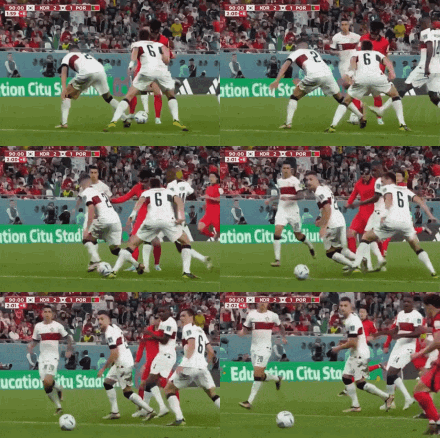
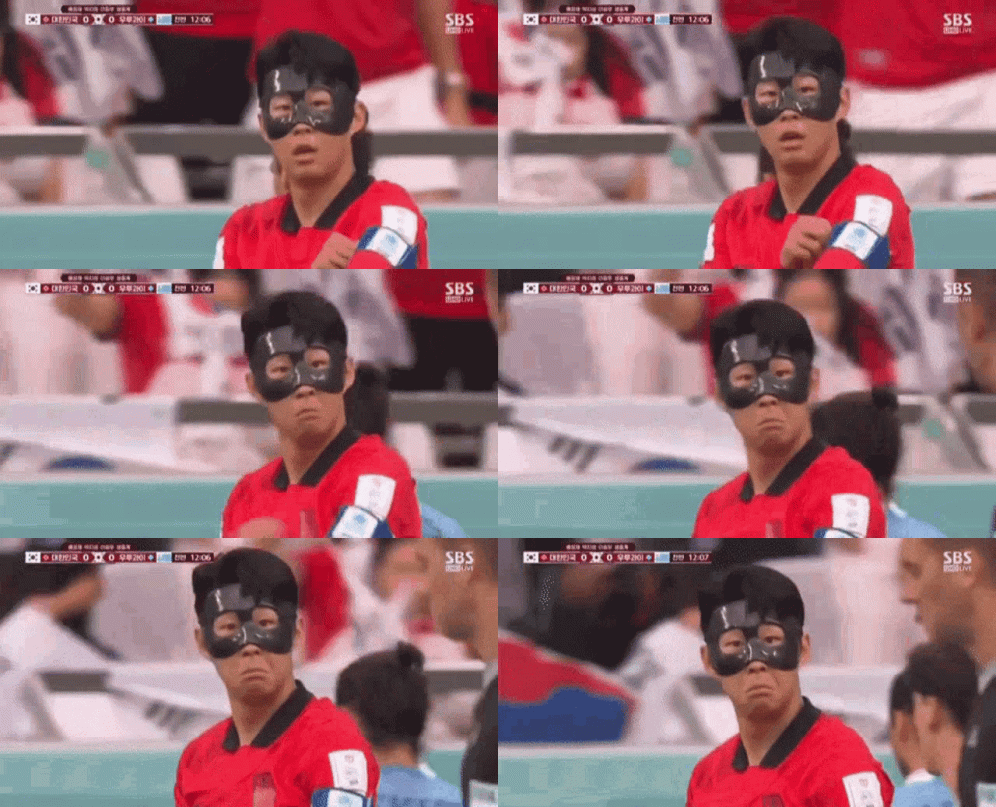
And that generation has not disappointed. I remember where I was during the ‘Miracle of Kazan,’ when South Korea knocked reigning champion Germany out of the 2018 World Cup in the group stage (partly because my landlord at the time, a German immigrant, was screaming loudly at the tv on the other side of the wall). Then there’s Sonny’s iconic masked run in 2022 to set up the winner to eliminate Portugal in the knockouts.
This tournament will, likely, be Sonny’s swan song. The rising gen won’t miss a beat, however, and is already loaded with bonafide stars to carry the torch.


Czechia 🇨🇿
Czechoslovakia was freed from Nazi Germany in 1945 only to be absorbed into the Eastern bloc by the Soviets 3 years later. So you could say the finals of the 1976 Euros against West Germany was a tense match. The iron curtains were still up. The world was watching. Everyone knew this was a battle that would transcended the pitch.
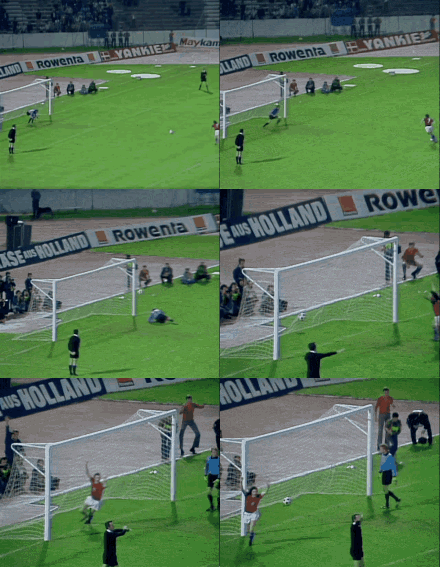
Hard fought, it was the first European final to come down to penalties. Czechoslovakia, kicking first, took the lead 3-4. Uli Hoeneß skies his chance over the bar. Czechoslovakia can win it with their next kick.
Up steps Antonín Panenka. Everyone is expecting him to try to bury it in the corner, the way all great penalty takers due. Instead, while the German keeper dives early to give himself a chance, Panenka lifts the ball softly down the center of the goal. The little chip floats instantly into football legend. A region caught between European powers for so long topples a juggernaut not through brut strength, but a dash of pure bohemian magic. “He is either a genius or a madman” says Pelé.
Either way, Panenka writes his name into the history books and the technique is named after him.
Even Czechia’s so-called golden generation has not been able to recreate that magic after the velvet divorce from Slovakia. Will this be their year?

Group B
Canada 🇨🇦
In the winter of 2000, while snow still blanketed the Rockies and frozen lakes were still covered with hockey rinks, the men of Canada men’s national soccer team traveled south with little fanfare. And why would there have been. We’re talking about a team that, in May 2026, has only appeared in two World Cups and has only ever scored one goal in the competition (technically two to their name, but one was a Morocco own goal). They’d never been a powerhouse team. Few believed they could compete among the powers of the CONCACAF Gold Cup.
But in the old tales from the north, the quiet traveler is often the most dangerous. And every game, they just kept hanging around.
They survived the group stages without a loss, leading to a face off with Mexico in knockouts. They throw elbows, fight for position, and get pucks in deep. They score an equalizer in the last ten minute. In overtime they catch Mexico on a counterattack to put the bury the golden goal in the back of the net.
Suddenly the impossible feels possible. Canada walked into the final against Columbia as a nation possessed. Jason de Vos gives them the lead just before half time. Carlo Crazzin adds a second from the spot to start the second half. Les Rouges just have to hold for half an hour to do the unthinkable. Columbia gave it everything they had. But maple trees are strong and the (Craig) Forrest stood unshaken.
Now their so-called golden generation prepares for their second appearance at the World Cup. May the spirits of the north guide them to their first ever win before they get grouped yet again.
Bosnia and Herzegovina 🇧🇦
They say “talent needs trauma,” but the story of Edin Džeko is an extreme case.
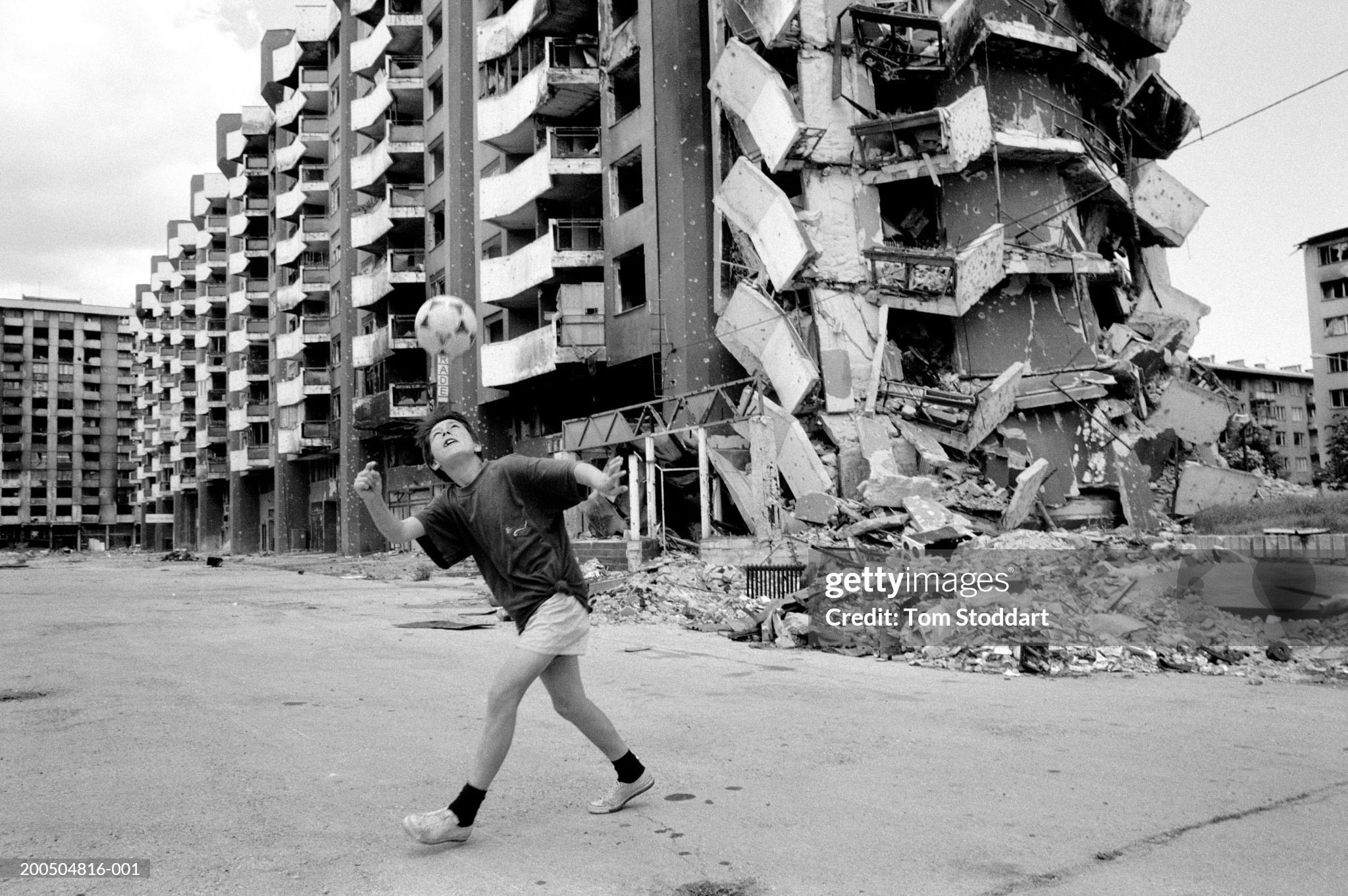
Born in Sarajevo in 1986, many of Džeko’s formative years were scarred by ethnic cleansing during the Siege of Sarajevo. In the wars that followed Yugoslavia’s dissolution, nearly 14,000 people were killed in Sarajevo alone, including more than 5,000 civilians. Džeko recalls losing his family home to explosions and being forced into a cramped flat with his extended family. His mother remembers him kicking a ball of duct tape through the streets whenever he could — at least until the concrete courtyard where he always played was bombed into rubble.
“The memory does not leave you. It was a very bad time, and I had a very sad and traumatic childhood… When the war was over, I at least felt stronger mentally. There was not much that could intimidate or frighten me after that.”
When the war finally loosened its grip, Džeko was given his chance to truly play. The rest became the saga of Bosnia and Herzegovina’s greatest footballer. He rose to prominence at VfL Wolfsburg, helping carry Die Wölfe to their first-ever Bundesliga title. He came into his own at Man City in the years before Pep Guardiola, providing the often-overlooked but vital contributions that helped forge two title runs — because before that Sergio Agüero goal, there was Džeko’s equalizer. He cemented his legend with unforgettable nights for AS Roma and Inter Milan in Serie A.
Yet the part of the story Bosnia and Herzegovina will remember most is Džeko leading the national team to its first-ever World Cup in 2014, announcing the nation to the world and helping mend wounds carved deep by history. Now, at 40 years old, Džeko marches once more into battle — not merely as a striker, but as the enduring symbol of a nation that survived.

Qatar 🇶🇦
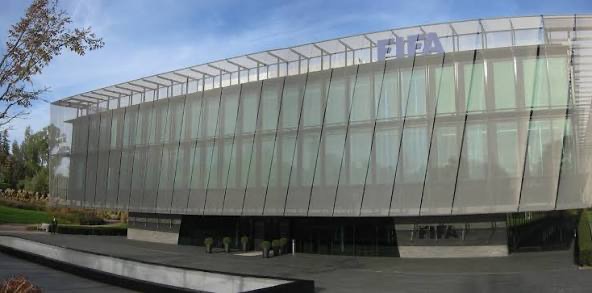
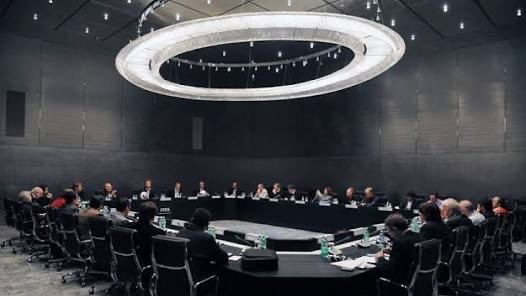
The voting room at FIFAs headquarters could not look more like an evil villains board room if they tried. So perhaps it was the perfect setting for the infamous announcement in 2010 that Qatar had won the bid to host the 2022 World Cup. Without existing infrastructure to do so. Without historical football culture (basically without even having a team). And despite blistering summer temperatures that would require playing the tournament in the winter, outside of the normal window.
In the years that followed, much and more was made about corruption within FIFA that had led to Qatar winning the bid. France signed a media rights deal worth hundreds of millions after their last second voting change and Qatar has been bankrolling PSG ever since. 16 of 22 voting executive committee members have been implicated in or investigated for corruption related charges — many of them entering guilty pleas in the US for other charges related to wire fraud, money laundering, and racketeering. Whistleblowers have come forward alleging various multi-million dollar payments to these voting members, several of whom recounted, entered witness protection programs, then claimed they recounted under various violent threats.
FIFA even eventually paid for a 450 paid report (the Garcia Report), which has conspicuously been under judicial seal in Germany and never released to the public. Michael Garcia eventually resigned claiming Judge Eckert was not acting independently or faithful to the process.
All that is to say, there has never been a (publicly available) smoking gun. But Sept Blatter didn’t resign in disgrace for nothing. And FIFA didn’t overhaul the voting process because it was working correctly. Qatar can try to sportswash all they want. They’re getting washed the fuck out at the group stage.


Switzerland 🇨🇭
The Swiss, to me, represent the demarcation line between truly good teams and middling teams. They are good enough to take down any of the power houses on the right day, but never good enough to win it.
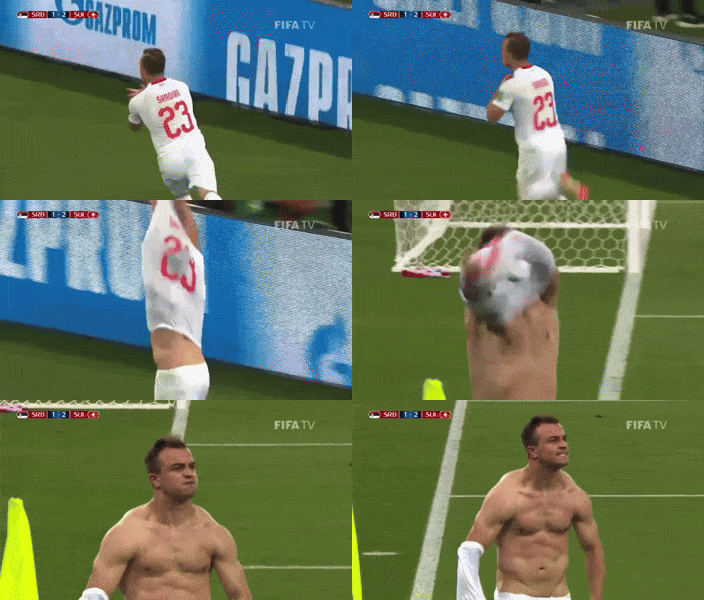
This will be their first international tournament since 2010 without the man built like a fire hydrant, Xherdan Shaqiri, aka Der Kraftwürfel (‘the power cube), aka Alpine Messi (or sometimes Minecraft Messi).
Shaqiri moved across the pitch like a refrigerator falling down a mountain. Clunky, but surprisingly fast. Humanity’s first sentient cannonball spent his international career appeared every two years to unleash a 30-yard thunderbolt into the top corner right into the heart of football fans. There are entire generations of Swiss fans have basically lived by one sacred truth: if the Swiss are at a major tournament and Shaqiri has space within 35 yards of goal, you must not look away. He will be sorely missed in 2026.

Group C
Brazil 🇧🇷
For many, the 2006 World Cup is most remembered for Zidanes infamous headbutt and Italy’s triumph in penalties. For Brazil, 2006 is remembered as the fall of the empire.
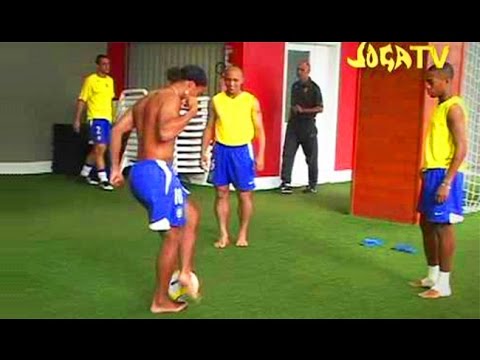
Nike’s Joga Bonito (“play beautiful”) campaign filled the airwaves (and 99% of my internet time) with clips of pure football wizardry. Moments from real games that were an absolute joy to behold. Skills clips that stopped you dead in your tracks and had you convinced they faked it (they didn’t). And so much of it centered around the stars of that 2006 Brazilian team.
And why not? Ronaldinho was, at the time, the best player in the world. Then there was Ronaldo (R7, not R9), Kaka, Juninho, Roberto Carlos, Cafu, Silva, Ze Roberto, and on and on. A squad so deep that the Brazilian manager ‘refused to pick a formation.’ He’d just roll the stars out there and let them shine. The 4-2-2-2 it ended up looking like (with the so-called “Quarteto Magico”) was fucking venomous. So much so that the talk leading up to the tournament wasn’t about which group of teams were good enough to win, it was about who would come in second.
But the lack of structure caught up to them. In the quarter finals against France, the (imo) greatest Brazilian national team of all time failed to score and were eliminated. The fallout was immense, leading to a dramatic change in mindset in the national team. They started to reject ‘the beautiful game’ in favor of European tactics and discipline. Stars were given extremely short leashes before being cut loose. But none of that change has brought Brazil back to the promised land.
The world is begging you, my friends. Joga bonito again
Morocco 🇲🇦
I have said this before, but Morocco is a footballing nation on the rise. And not by accident or because of some golden generation. Their men, women, and youths continue to get better because Morocco is spending lavishly on sports development, with football at the forefront.
Morocco’s footballing renaissance began in 2009 with a $65 million dollar investment into the Mohammed VI Football Academy. The academy combined high quality education opportunities with an emphasis on football development. Since then, Morocco has followed up with massive investments (on the scale of tens-hundreds of millions) into other development facilities and academies. They have also spent ~3.5 billion on stadiums so far, with another 4-5 billion spend planned to build the Hassan II Stadium (and infrastructure around it) in Benslimane ahead of the 2030 World Cup.
Basically, they have put their money where their mouth is to try to drive Morocco to the forefront of the footballing world – on both the mens and womens side.
And it has been working. Both the men’s and women’s teams outperformed expectations at their last World Cup outings. On the men’s side, five of the starters had come through the academy, with the other stars coming from diaspora commitments and drawn to Morocco (instead of power houses like France, the Netherlands, or Spain) because of their perception of the rising tide in Morocco. Similarly, the women’s side pulled six of their starters straight from the academy.
It has to be said, however, that not everything is sunshine and rainbows with Morocco’s investments. A Gen Z movement led massive protests against football investments in 2025, triggered by the deaths of eight women waiting for treatment in a hospital in Agadir and the slow reconstruction of villages in the Atlas mountains. ‘The stadiums are here, but where are the hospitals?’ they ask. To the King’s credit, Morocco has shifted public investments since the protests. Time will tell if that is seen as a bandaid for a larger problem or a turning point in Morocco’s priority balancing.
Haiti 🇭🇹
Haiti entered the 1974 World Cup as only the second Caribbean team to ever qualify. Instant tournament darlings, their opening goal against Italy was met with a roar from the hosting German fans. A cleared Italian cross fell to the feat of Philippe Vorbe, who played an inch-perfect ball through to Emmanuel Sanon. Sanon coolly dribbled around Dino Zoff and thundered the ball into the net. Italy came back to win the game 3-1, but Sanon’s goal was written straight into legend.
As much joy there is in the memory of the 1974 World Cup for Haiti, however, there is just as much a cloud of controversy.
In that era, Haiti was ruled by the Francois ‘Papa Doc’ Duvalier and Baby Doc dictatorship. To their credit, they satiated their obsession with football by spending lavishly on the national team. Against their credit, Papa Doc disappeared Haitian-American Joe Gaetjens (who famously scored to eliminate England in the 1950 World Cup) for being outspoken against him. More pertinent to our story here, Haiti’s 2-1 triumph over Trinidad and Tobago in the qualifiers for the 1974 World Cup was played in front of a crowd that included plants paid by Baby Doc to be loud and proud in the stands. Moreover, the game included 4 goals for T&T disallowed by a ref that would later be banned for accepting bribes. One certainly has to wonder.
Fast forward to the World Cup, player Ernst Jean-Joseph failed a drug test at the tournament. He blamed the pills he took fair asthma, but Baby Doc’s regime didn’t care. Haitian officials allegedly drug him out of the school where the team was staying screaming, beat him, and flew him straight back to Haiti. The rest of the team was so rattled they lost 7-0 to Poland the next day.
“We’d been protected from that side of the regime, but now we saw the dark side. We had a sleepless night before the Poland game. I was only thinking about Ernst, not the game.”
Sonan went on to score a screamer in their final game (another 3-1 loss) to numb the pain. And Jean-Joseph was eventually allowed to return to the national team. Today, most Haitians look back on that 1974 team fondly. Remembering the goals that made Europeans wonder where Haiti was on the map, not the violent regime that supported the team.
They now enter the 2026 World Cup as the first Caribbean team to qualify for their second tournament. Similar to their last appearance, a single goal would be instantly catapulted into Haitian folklore. Either way, Philippe Vorbe will be in the stands cheering Les Grenadiers on.

Scotland🏴
Scotland played England in the first international football match in 1872. The 154 years since has seen a lot of history. From the birth of the Webley Wizards in 1928, to the unofficial world champions in 1967, to Archie Gemmil’s solo goal at the 1978 World Cup (one of the greatest goals of all time), to Scott McTominay’s 2026 overhead kick that is now commemorated on a limited edition £20 note.
But if you plan to watch any Scotland games with the Tartan Army this summer, you’ll need to know the lyrics to Baccara’s Yes Sir, I Can Boogie.
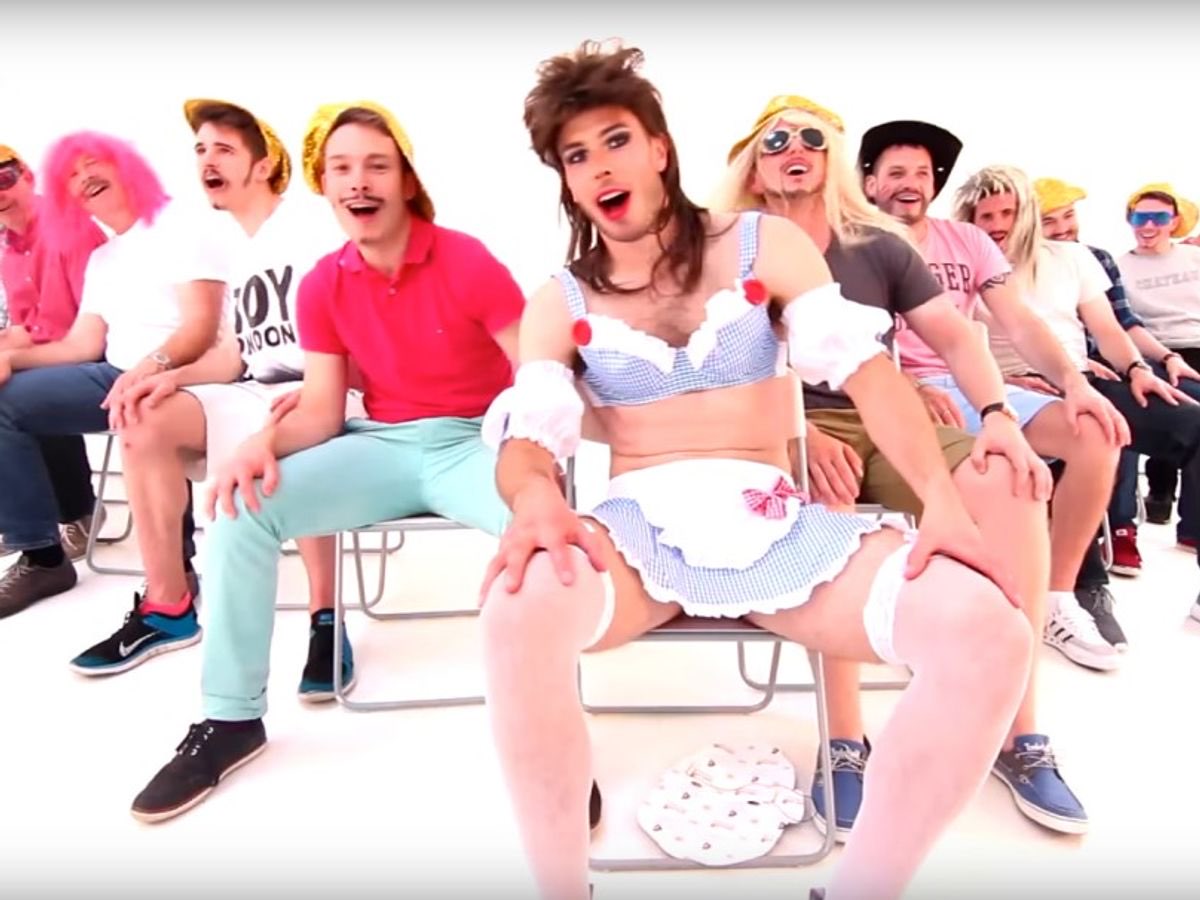
It all began with a 2015 video of Aberdeen cult hero, Andy Considine. The video is from his stag do (his bachelor party) and features Andy, dressed in drag, dancing to the song. As the song gained traction, it was sometimes played at Scottish games. Then a video of Andy dancing to the song with his teammates emerged after Scotlands win to qualify for the 2020 euros. The song exploded in popularity and the Tartan Army vowed to get it to number 1 on the charts (they made it all the way to number 3, not bad).
Now, amongst the bag pipes and old classics, you will always find the Scottish proudly proclaiming that they can, in fact, boogie. But they need a certain song. They can boogie, boogie woogie all night long.

Group D
USA 🇺🇸
The 1994 World Cup is famous among American soccer fans for many reasons. From the iconic denim jerseys to the fact that it still stands as the most financially successful World Cup in history. Most importantly, however, the 1994 World Cup directly led to the creation of the MLS and massive investments in youth soccer (both conditions of World Cup being awarded the US).
The question is why was that necessary? In the 1970s, the National American Soccer League was growing rapidly. Global stars like Pele, Franz Backenbeuer, Johan Cruyff, Gerd Müller, Eusébio, Bobby Moore, and George Best had all come to play in the US. And the 1978 Soccer Bowl had 70000 people in attendance (only 5000 shy of that year’s Super Bowl). So what the hell happened?
Like all things that turn a turn for the worse in the 80s, the answer is Ronald Fucking Raegan. Raegan’s aggressive economic policies in the early 80s sent interest rates skyrocketing to levels that would be unheard of today. The resulting recession hit consumers, businesses, and investors alike. A league built on ambitious owners absorbing losses as an investment in future growth suddenly found itself in the worst possible environment. Borrowing became almost impossible, discretionary spending was difficult to imagine, and attendance at all sporting events plummeted. While the NASL was spending aggressively, their spending was no different than the early years of the NFL, MLB, or NBA (imo their spending was actually more restrained). The difference is that those leagues matured before Raegan entered the arena.
There’s also a cultural angle. Reagan’s vision of America was deeply intertwined with ‘traditional’ American values, and soccer was still widely viewed as a foreign curiosity. The Raegan shift in culture pushed soccer away, insisting on American sports we could pretend to dominate over a global landscape for competition.
In short, the NASL is a story of what could have been. And I have virtually no doubt we would have won the World Cup by now if not for Ronald Raegan.
Paraguay 🇵🇾
Paraguay is a relatively small, landlocked nation sandwiched between two titans in the world of football. No wonder, then, that their reputation is a scrappy, bruising, and relentless style of play. Some would even call them masters of the dark arts, capable of throwing very different attacks your way.
Emblematic of this reputation is Paraguay’s legendary keeper, José Luis Chilavert, perhaps most well-known for being a free kick and penalty specialist (and the second highest scoring goal keeper of all time). A man who believed the field belonged to him from endline to endline, Chilavert hunted for goals while other keepers prayed for saves. This guy would throw himself forward to disrupt counter attacks with counter-counter attacks (and scored from the half line once). He would demand his fair share of free kicks, even when they were being taken all the way at the other 18.
And you can understand why. His left foot was kissed by the Guaraní gods and he could fucking thump the ball. In 1998, he marched out from his net and became the first goalkeeper ever to take a direct free kick at a World Cup. The shot screamed toward the top corner until fingertips pushed it away. He tried again four years later, this time from nearly 40 yards out. The lightning strike thundered and curled toward the top right corner, but was again just barely thwarted by a fingertip save. Sometimes the best moments at the World Cup are the travesties. Sometimes they are the moments that might have been.


Australia 🇦🇺
Before 2006, Australia had only ever qualified for one World Cup (1974 in West Germany). They are a major sporting nation that, like the US, doesn’t care as much about soccer. You might be surprised to learn, then, that the Socceroos hold the record for largest margin of victory in an official international match.
They have that record because Australia, given their location, used to play their World Cup qualification matches in the Oceania Football Confederation. In April 2001, the Socceroos hosted Tonga for a friendly 22-0 ass kicking. After the game, Tonga’s head coach questioned the need for Australia to have brought so much firepower to the game, noting that “if you combine the total monetary worth of the Socceroos and divide it by five, then you have the total economy of Tonga.”
22-0 is not the record I was talking about. A few days later, the Socceroos gave American Samoa an absolute flogging. The game ended 31-0. Archie Thompson alone scored 13 goals. Australia’s then-manager Frank Farina criticised the qualification format and questioned the need for Australia to play these matches.
Australia would go on to lose the OFC–CONMEBOL qualification playoff to Uruguay, leaving the record breaking watching the 2002 World Cup on the tele at home.
That was the breaking point. Australia then moved to join the Asian Football Confederation, and were officially admitted following the 2006 qualification cycle. They never looked back. Since then, Australia’s more regular matches against legitimate teams, and Asia’s available auto-qualification spots, have seen Australia make every World Cup since 2006.
May they take an absolute walloping from the US in 2026.
Türkiye 🇹🇷
Turkish football culture is exactly what you’d expect for a nation that is not a European powerhouse, but not quite a perennial underdog. It is full of passion, chaos, and moments of defiance. In the Süper Lig, club football is played in stadiums where flares and fires have lit the stands. Fan clashes are common. Turkey fans brawled with Georgian fans in the stands of the 2024 Euros. And coaches and club execs sometimes ignite the game. Faruk Koca (president of MKE Ankaragücü at the time) even rushed the pitch to punch referee Halil Umut Meler in 2023. We’re talking about a football culture where the line between spectacle and bedlam is perilously thin.
That same combustible energy fuels the spirit of the national team. Sometimes for the worse, resulting in flashpoints such as the “Shame of Istanbul” tunnel brawl after the 2005 World Cup playoff match against Switzerland or the Turkey-Czechia match that produced a tournament-record 18 cards (2 cards shy of tying the all-time international record).
Sometimes that passion fuels the team for the better. Turkish sides are famous for refusing to accept defeat, giving Turkey a reputation as the “Comeback Kings” at Euro 2008 (a tournament that included a last kick goal in the 123 minute to send the match to penalty kicks). Their greatest triumphs (e.g. the miracle run to third place at the 2002 World Cup, the run in 2008 Euros, etc.) have rarely looked polished or inevitable. They have been stubborn, emotional, and never-say-die performances.
Turkey’s second golden generation, led by stars like Arda Güler and Kenan Yıldız, enters this tournament ingrained with the indomitable spirit of the past. But they also enter with more talent and promise than Turkey has ever had before. With that, the pressure is on to produce something more than purely scrappy performances.
Group E
Germany 🇩🇪
The Germans have a saying about football. “The ball is round and the game lasts 90 minutes.” The saying originates from legendary German coach, Sepp Herberger. Gary Lineker (former captain for England) has a different, often repeated saying. “Football is simple game. 22 men chase a ball for 90 minutes and at the end, the Germans always win.” At least they used to.
Lineker’s saying reflects Germany’s one time status as a relentless inevitability. This status was born out of World Cup triumphs. Their legend began in earnest with the ‘Miracle of Berne’ at the 1954 World Cup where West Germany beat the “Golden Team” from Hungary (a team led by Ferenc Puskas that had 34 wins, 6 draws, and 1 defeat since 1949; and the team that achieved the highest elo ever recorded for a national squad) to win their first World Cup title. Their relentless reputation grew in 1974 when Germany conceded a goal to Cruyff’s total footballing Netherlands before even touching the ball, but rallied to win the game 2-1. Then there’s moments like the Mineiraço (loosely the “Agony of the Mineirão”) in which Germany decimated tournament hosts Brazil 7-1 before beating Argentina to claim their fourth World Cup title.
Then the machine ground to a halt. The golden generation that won the 2014 World Cup in dominant fashion aged quicker than expected (plagued by injuries to multiple stars, Ozil being by football canceled for speaking out for Muslim rights, etc.). Meanwhile, the Bundesliga system that had produced the golden generation at the 2014 World Cup had become too focused on money and had not produced a new crop of young talent. Germany crashed out of the 2018 World Cup in the group stage. Some just chalked it up to ‘the Champion’s curse.’ But then they got eliminated early at Euro 2020 and got grouped again at the 2022 World Cup. Something was clearly broken. The machine needed maintenance.
What is crazier is that these defeats happened while Bayern’s 2019/20 team achieved the sextuple and wrote their names down as one if, if not the, best club teams of all time. And that team was largely driven by Germans.
So Germany refocused their development academies. They pressured Bundesliga clubs to give young stars more chances on the big stage. And they hired a new manager (Julian Nagelsmann). Now, their rising talents in Musiala and Wirtz, aleady global superstars, enter the tournament backed by veteran talents. While not tournament favorites, they’re an exciting squad that looks to remind the world not only that football is a simple game, but that the Germans always win.
Curaçao 🇨🇼
There are Cinderella stories in international soccer, and then there is Curaçao. When the Blue Waves qualified for the 2026 World Cup, they became the smallest nation to ever do it (with less than half the population of the previous record!) – Boise, Idaho and Akron, Ohio both have a bigger population. And the official team only emerged in 2011 after the dissolution of the Netherlands Antilles and establishment of Curaçao as a constituent country in the kingdom of the Netherlands.
So how did they get here? Caribbean island flair and reverse colonialism baby. Curaçao may be a tiny Caribbean island with a modest, but growing grassroots football program, but the Curaçao diaspora spreads across the Netherlands. The Blue Waves are built on the back of Dutch football infrastructure and mutual recruitment. 23 or 24 of their best players are Dutch-born internationals recruited to the National team. On the flip side, arguably their best player – Tahith Chong – is native born but was recruited into Dutch academies when he was 10. Welcome to modern football.
Curaçao found their way to an undefeated run in World Cup qualifying through a combination of disciplined Dutch defending and creative island/South American-style attacking. Now, they find themselves as runaway underdogs in a Group with Germany, Ecuador, and the Ivory Coast. Germany alone has more registered footballers than Curaçao has citizens. On paper, Curaçao should lose all three games.
I don’t think they will. This isn’t a run-of-the-mill, “happy to be here” underdog. We’re talking about a team that has talent spread across the European leagues (albeit no players currently on perennially great teams) that plays tactically organized defense and counters with absolute venom. One counter attack could spell a historical upset.
Let the Blue Waves come crashing in.
Côte d’Ivoire 🇨🇮
Prior to the 90s, Côte d’Ivoire had been one of West Africa’s most stable and prosperous countries. That stability attracted migrants from all over Africa. So when economic conditions took a downturn in the 90s, the concept of ivoirité (“Ivorian-ness”) emerged to question whether various groups (particularly people from the predominantly Muslim north) were truly Ivorian. And so the southern Christians began to marginalize the northern Muslims.
The tension boiled over into a civil war in 2002 with a rebellion by the northern soldiers. The first years of the war saw massive violence on both sides of the “Côte d’Ivoire Line.”
The national football team, Les Éléphants, drew players from both sides of the line. Players who had been together since before the war who recognized the possibility of coexistence. In November 2005, the team beat Sudan 3-1 to secure qualification for the 2006 World Cup, the first time Côte d’Ivoire had ever qualified.
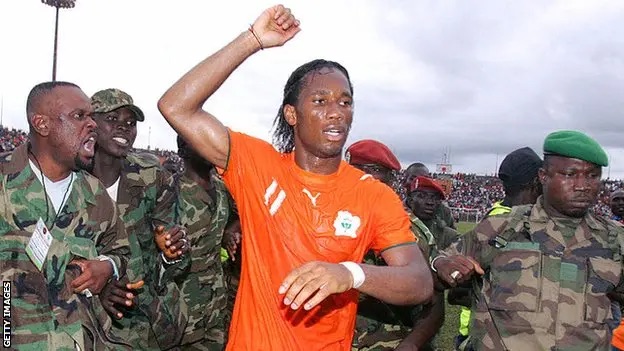
While fans celebrated in the stands, Didier Drogba (their best ever player and then team captain) delivered a legendary speech from the tunnel surrounded by his teammates, Ivorians from all over the country. In the speech he begged everyone to lay down their weapons, forgive one another, unite, and hold elections.
A ceasefire (that admittedly had been under negotiations before the speech) was agreed to weeks later. Elections were eventually held (though the results were violently disputed). And Côte d’Ivoire has slowly healed, still in the backs of that golden generation of football.


Ecuador 🇪🇨
Moisés Caicedo was born in November 2001 in Santo Domingo. He grew up as the youngest of 10 children, doing anything he could to help his family make ends meet. He’d sell flowers around Valentine’s Day and near the graveyards. He’d help park cars in the city.
His passion for football was born in the streets and a dirt pitch behind his school with stones that marked the goal. When it turned out he had a passion for football, his family paid it forward. “For example, my brothers went without food to buy boots for me.”
One day, Caicedo was kicking a ball around on the streets when a local coach noticed he was head and shoulders above the other kids. So he stuck him on his club team and helped him pay for fees. Even Caicedo progressed and made it into academies with professional teams, that coach would make sure he could pay for boots, bus fairs to training, lifts to matches, you name it. “‘He is really important to me and special to me.’From the beginning, in my first steps, he was with me, he supported me with money, boots, with everything I needed.”
That coach should get a medal from the Ecuador national team. Caicedo made his start for Ecuador at 17 and has barely had any hiccups since. He soon moved to Europe and is eventually became Chelsea’s $100+ million midfield magician. And now he’s headed to his second World Cup at just 23.
Now you might ask, what does a newly rich, global phenom do with his money? He’s got to be a bit of a prick, right? Wrong (at least as far as I can tell). Caicedo is living his dream and doing everything he can to help the next generation live theirs. This guy has already started and funded 38 football academies across Ecuador hosting 1500 kids and counting. The philosophy is simple. “Give kids the opportunities I didn’t have.” I wonder who he might be leaning on to develop talent.